
Oct 21, 2026Material Notes
Stainless Steel Pet Feeder Wholesale: A B2B Buyer's Guide
Stainless steel vs plastic pet feeders: hygiene, durability, chew resistance, cleaning and cost, plus what wholesale buyers should verify in samples.
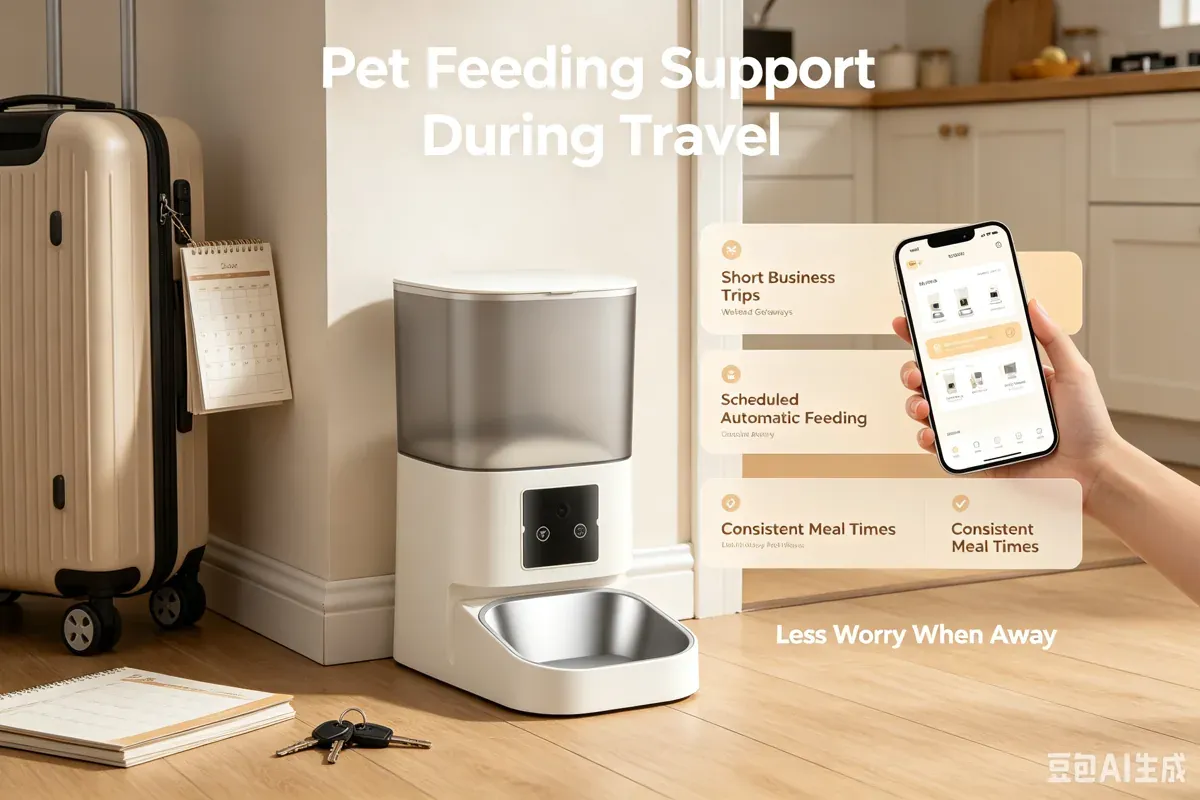
Buyers searching for stainless steel pet feeder wholesale usually mean one of two things: a feeder with a stainless steel bowl, or a feeder with a stainless steel body. Most automatic feeders in this category are the first: a matte ABS body with a stainless steel bowl. That distinction changes the hygiene claim, the cost and what you should verify in a sample.
This guide compares them on hygiene, durability, chew resistance, cleaning, cost and customer perception, and lists what to check in a sample.
Stainless Steel Pet Feeder Wholesale: What the Claim Means
There are three common configurations:
1. Stainless steel bowl, plastic body. The bowl is the food-contact part; the body, lid and chute are structural plastic.
2. Stainless steel bowl and body. Less common, heavier and usually more expensive. Confirm which panels are actually metal.
3. All-plastic. The bowl and body are plastic. This is the entry option in many markets.
Our automatic feeders use a matte ABS body and a stainless steel bowl. The bowl is the food-contact part. Confirm on the sample whether it lifts out for cleaning and how it locks. The body is not stainless steel, and the listing should not imply that it is. Examples in the range include the CW-W2408S Square and the CW-W2409S.
Ask which parts are stainless before accepting a marketplace claim. "Stainless steel feeder" can describe only the bowl.
Stainless vs Plastic: Side-by-Side
• Factor — Stainless steel bowl — Plastic bowl or body — What it means for buyers
• Food contact — Non-porous metal surface — Can scratch and retain residue — Stainless is easier to keep clean over time
• Odor — Does not absorb food oils readily — May retain odors — Relevant for wet or oily kibble residue
• Durability — Resists cracking; can dent — Can crack or chip — Check gauge and rim finish
• Chew resistance — Hard for a dog to damage — Rim and bowl can be chewed — Claim applies to the bowl, not the whole unit
• Cleaning — Rinses clean; check care instructions — May need more scrubbing — Confirm dishwasher guidance with the supplier
• Weight — Heavier — Lighter — Affects shipping and bowl stability
• Cost — Higher material cost — Lower material cost, more design freedom — Do not promise a fixed retail price gap
• Customer perception — Associated with hygiene and premium — Associated with value and color choice — Supports different shelf positions
• Replacement — Bowl is a wear part — Bowl or body may need replacement — Keep spare bowls in the after-sales plan
Hygiene: What You Can and Cannot Claim
Food sits in the bowl for hours. A scratched plastic bowl can hold residue; stainless steel is less porous but still scratches. The practical difference is cleanability and how long the surface stays serviceable.
Recommendations: remove and wash the bowl daily, dry it before refilling, replace deeply scratched bowls, and avoid abrasive pads on any bowl. These are care instructions, not product guarantees.
Do not claim antibacterial, sterile or any food-safety approval unless you have test data and the correct regulatory basis for the market. The claims you can support are the material, the bowl design and the cleaning instructions.
Durability and Chew Resistance
Chew resistance applies to the bowl, not the whole feeder. A stainless steel bowl is harder for a determined dog to damage than a plastic bowl, but the ABS body, lid and chute can still be chewed. Position the claim accurately: "stainless steel bowl", not "chew-proof feeder".
Durability also depends on gauge and edge finish. A thin bowl dents and flexes; a rolled edge is stiffer and safer around the mouth. Ask for the gauge and inspect the rim in the sample.
Cleaning and Daily Use
Stainless bowls are simple to rinse; plastic bowls may retain an oil film. The feeder body should be cleaned dry, and the hopper should be emptied before washing. Bowls that lift out and hoppers that open without tools reduce cleaning time, which matters in shelters and multi-cat homes. Confirm both on the sample before you write the claim.
Check whether the bowl is dishwasher safe before you put it in the listing. Do not assume. The supplier's care instructions should match how your market will actually clean the product. For capacity and bowl-configuration questions, see the 5 L vs 6.5 L guide; for routine care, use the cleaning guide.
Cost and Customer Perception
Stainless adds material cost. Plastic adds design freedom and lower shipping weight. Neither is automatically cheaper at the shelf: packaging, brand and channel decide the retail price. Do not promise a price gap you cannot support with a current quotation.
Customer perception is real. Stainless steel is associated with hygiene and durability, and a visible stainless bowl can support a premium position. Plastic supports color matching and lower entry price points. The same feeder family can serve both positions if the bowl and packaging are specified clearly.
What to Verify in Samples
• [ ] Confirm which parts are stainless: bowl only, or bowl and body.
• [ ] Ask for the grade in writing. If the listing says 304, confirm the grade with the supplier; do not assume it.
• [ ] Check the gauge or thickness and the rim finish.
• [ ] Inspect for sharp edges, weld spots and flex.
• [ ] Check bowl fit and rattle in the base.
• [ ] Confirm care instructions, including any dishwasher claim.
• [ ] Review the material certificate or test report if the supplier provides one.
• [ ] Compare shipping weight and carton quantity.
• [ ] Confirm that replacement bowls are available.
• [ ] Test with the kibble and feeding routine used in the target market.
A magnet is not a reliable grade test. Different stainless grades behave differently, and a magnet does not tell you the alloy or the compliance. Ask for the material specification instead.
How to Describe the Product in Listings
Write the material claim at the level you can support:
• "Matte ABS body with a stainless steel bowl" is precise and matches the construction.
• "Stainless steel bowl" is accurate when the bowl is the only stainless part.
• "304 stainless steel" should appear only after the supplier confirms the grade in writing.
• "Chew-resistant bowl" is narrower and safer than "chew-proof feeder".
When Plastic Is Still the Right Choice
Plastic remains the better choice when:
• The price point is the main purchase driver.
• The buyer needs color matching or a private-label look.
• The order includes double bowls and low-cost replacement parts.
• Shipping weight matters for e-commerce or air freight.
• The market expects a separate stainless bowl as an upsell.
• The product is a short-life promotional item rather than a durable good.
A plastic feeder with a stainless bowl can cover both positions: lower cost and weight, with the bowl carrying the hygiene message.
FAQ
Is stainless steel better than plastic for a pet feeder?
It depends on the part. A stainless steel bowl is less porous and easier to clean than a plastic bowl, and it resists chewing better. The body is still plastic on most automatic feeders, so do not extend the bowl claim to the whole unit.
Is the bowl 304 stainless steel?
Only claim 304 if the supplier confirms the grade in writing. Our specification is a stainless steel bowl; confirm the exact grade with the supplier for the model and order. Do not rely on a magnet or a marketplace listing.
Can I say the bowl is dishwasher safe?
Only if the supplier confirms it for that bowl and your market's care instructions. Otherwise, state that the bowl is stainless steel and describe the cleaning method the supplier confirms.
Can I order a private-label stainless steel feeder?
Yes, within the standard terms: 100 units per model, OEM from 500 and ODM from 2,000. Logo, packaging and bowl configuration depend on the model. Request a written scope before committing.
Do stainless steel bowls fit every model?
No. Bowl size and locking method vary by model and by single or double configuration. Confirm compatibility and order spare bowls with the first bulk order.
Conclusion
For stainless steel pet feeder wholesale, the important question is not "metal or plastic" but "which part is metal and what does that let me claim?" A stainless steel bowl supports a hygiene and durability story; the ABS body keeps cost, weight and design flexibility in range. Verify the grade, gauge, rim finish and bowl fit in the sample, and write the listing at the level the supplier can document. That gives distributors and private-label brands a claim they can defend and a product that fits the channel.