Oct 21, 2026Pet Feeder Wholesale Guide
Pet Feeder Supplier China: A 12-Point Audit Checklist
12-point pet feeder supplier audit for sourcing: license, components, motor, portion accuracy, app stability, packaging, certificates, MOQ, spare parts.
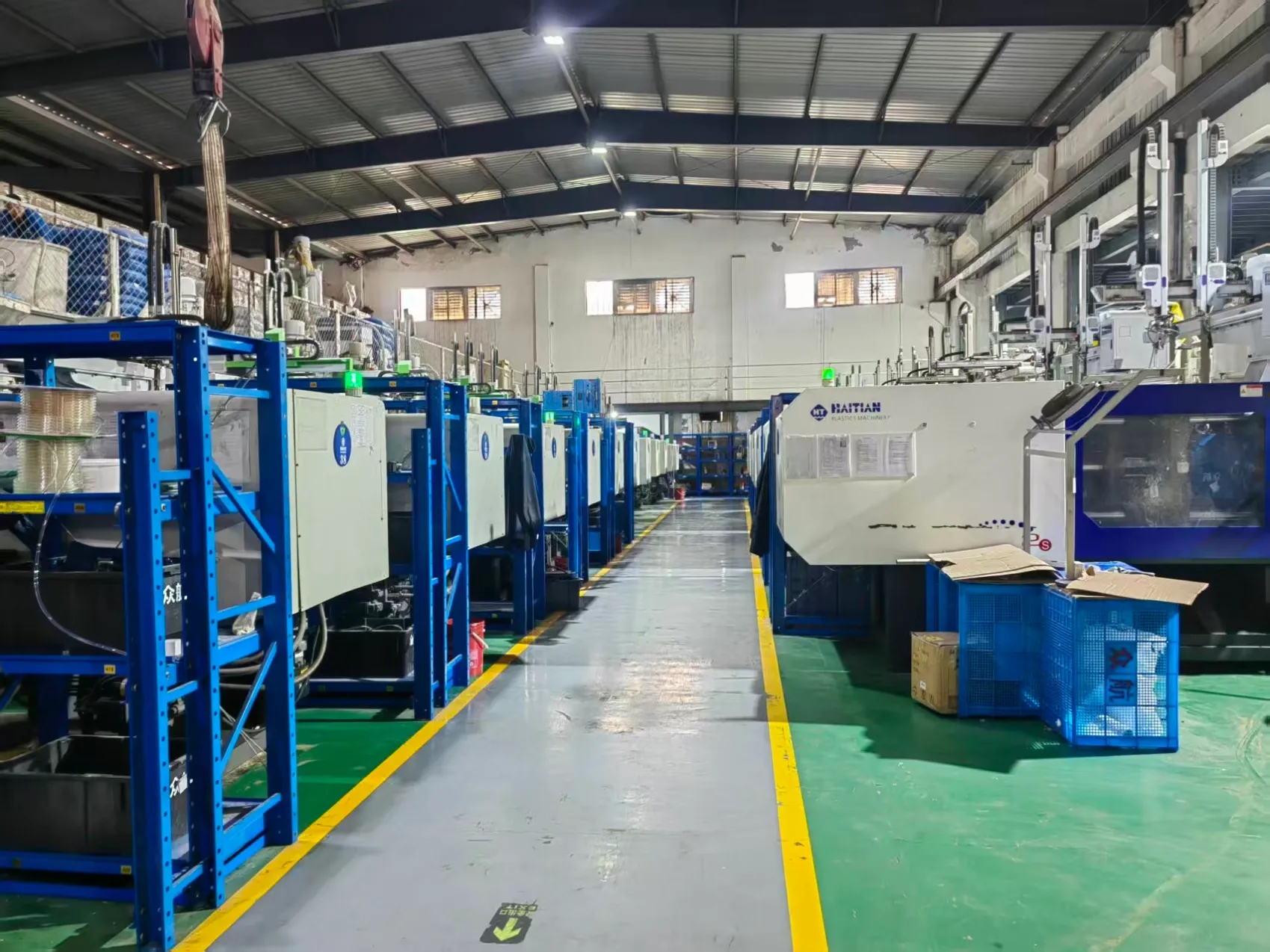
Buyers often start with a search for "pet feeder supplier China" and end up comparing near-identical marketplace listings. The differences show up in the motor, the hopper fit, the portion accuracy, the packaging and the paperwork. A structured audit is how a buyer moves from a sample that works to a supply relationship that holds.
This 12-point checklist is built for distributors, private-label brands and retailers placing a first or repeat order. It covers company documents, mechanical parts, performance, packaging, certificates and commercial terms.
Why a Supplier Audit Is Different from a Sample Test
A sample test answers one question: does this unit work? An audit answers a different one: will the next 1,000 units work, arrive undamaged and carry the right documents? A good sample from a weak process is a trap.
Audit before the purchase order, then repeat the key points during production. The checklist below puts document checks first, because a mismatch there ends the conversation early.
The 12-Point Pet Feeder Supplier China Audit Checklist
• # — Check — Evidence to request — Red flag
• 1 — Business license — Company name, scope, validity, export status — Name differs from the proforma invoice
• 2 — Product scope — Catalog versus actual product lines — Every category claimed with no evidence
• 3 — Key components — Motor, gearbox, PCB, sensor and pump sources — "We use good parts" with no list
• 4 — Motor and gear — Specification, duty cycle, stall protection — Supplier cannot describe the gear material
• 5 — Hopper fit — Lid seal, outlet alignment, bowl seat, tolerances — Sample rattles or the lid lifts
• 6 — Portion accuracy — Test method, scale, stated tolerance — Only a short video, no repeat test
• 7 — App stability — Pairing, schedule retention, region, firmware — Demo account only, no test unit
• 8 — Packaging drop test — Protocol, report, drop orientation — No report, only "standard export carton"
• 9 — Carton quantity — Pieces per carton, outer dimensions, gross weight — Figures differ from the spec sheet
• 10 — Certificate coverage — CE, FCC, RoHS, EN 62233 reports and model list — One certificate presented as covering all models
• 11 — MOQ and lead time — 100 per model, OEM 500, ODM 2,000; 7–30 days — Vague "it depends" with no schedule
• 12 — Spare parts — Bowls, motors, gears, adapters — No parts list or after-sales path
1–2: Company and Product Scope
Match the business license name to the proforma invoice, the bank account and the certificate applicant. If three different names appear, ask for the relationship in writing. Check that the licensed scope covers the products you are buying. A trading company can supply a feeder, but the manufacturing partner still has to be identifiable.
Product scope is about focus. A supplier that lists feeders, fountains, litter boxes, toys and grooming in one catalog may still be capable, but ask which lines come from which partner and which have current certificates. A broad catalog is not a red flag by itself; an unexplained broad catalog is.
3–5: Components, Motor and Hopper Fit
Ask for a component list: motor, gearbox, PCB, sensors and pump. Then ask about change control. If a motor or gear supplier changes without notice, portion accuracy and jam behavior can change with it.
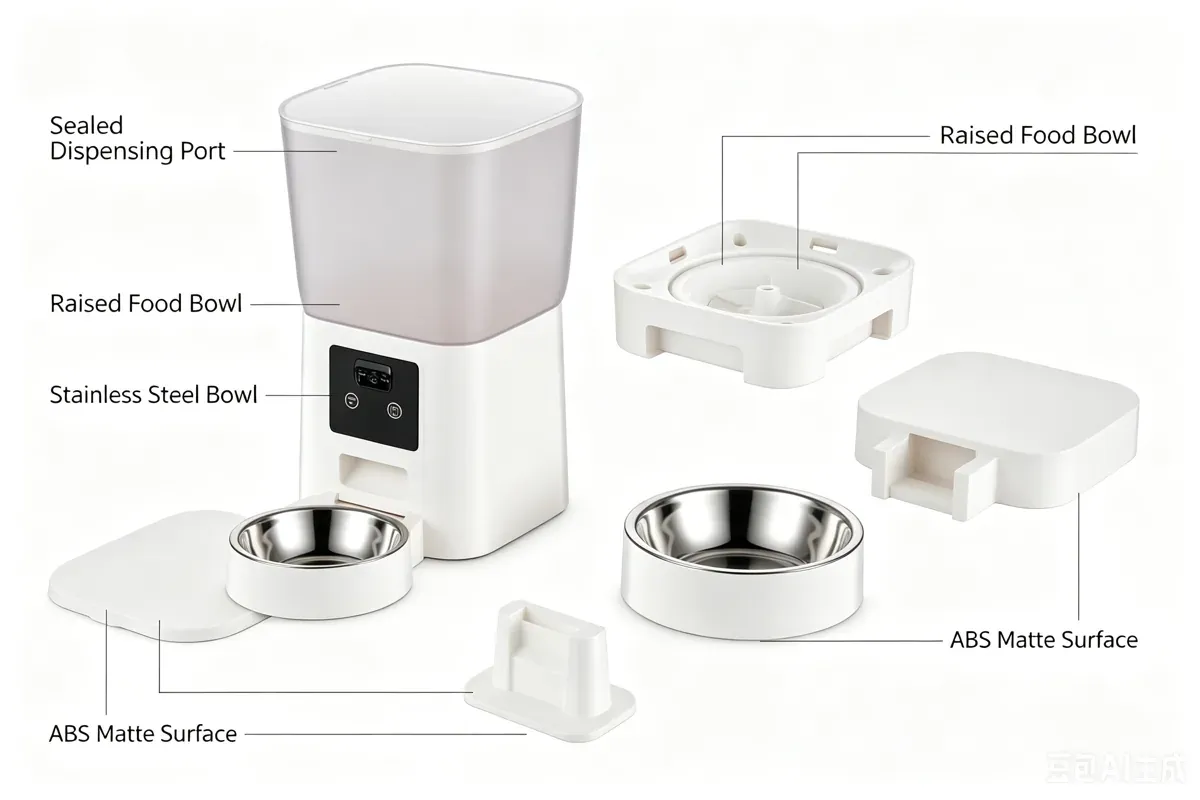
Motor and gear checks are about margin, not peak output. Ask for the intended duty cycle, gear material and stall protection. For the hopper, check the lid seal, outlet alignment and bowl seating on the sample, then ask how those tolerances are controlled in production.
On portion accuracy, use a scale, not a video. Confirm the tolerance for each setting and the test method. For the 5 L button models such as the CW-W2510 Button, the stated range is 20/40/60/80 g ±5 g and a manual 10 g ±2 g. Verify repeated cycles on the same unit, not one perfect run.
6–8: Performance, App and Packaging
App stability matters for WiFi and video feeders. Test pairing, schedule changes, power-loss recovery and multi-user access on a real unit in the destination region. Ask how firmware updates are handled and what happens if the cloud service changes.
Packaging is part of the product. Request the drop-test protocol and report, plus carton dimensions, quantity per carton and gross weight. For reference, the 5 L single-bowl feeder ships 12 pieces per carton in an outer carton of 570×380×500 mm, with a gross weight of 18 kg. Confirm those figures for the exact model, bowl configuration and packaging version you order.
9–12: Certificates, MOQ, Lead Time and Spare Parts
Certificate coverage is model-specific. Request the current certificate pack and check that the model and ratings match the SKU you are buying. CE, FCC, RoHS and EN 62233 documentation is available; certificate coverage varies by model — request the current certificate pack.
Commercial terms should be in writing: 100 units per model, OEM 500, ODM 2,000, with a standard lead time of 7–30 days. Custom orders are quoted separately. Ask for a spare-parts list and the cost of keeping bowls, motors and gears in stock.
How to Score and Follow Up
Score each point as pass, fail or needs evidence. A supplier with two unresolved red flags is not ready for a bulk order, even if the sample is good. Put the open items in the purchase order or a quality agreement, and schedule a pre-shipment check on the first order.
Use this pre-order checklist to close the audit:
• [ ] License, invoice and certificate applicant names match.
• [ ] Component list and change-control process received.
• [ ] Motor and gear specifications received in writing.
• [ ] Hopper, outlet and bowl tolerances checked on the sample.
• [ ] Portion weights tested repeatedly at each setting.
• [ ] App tested on a real unit in the destination region.
• [ ] Packaging report and carton figures received.
• [ ] Certificate pack matches the exact model and variants.
• [ ] MOQ, lead time and custom-order scope confirmed.
• [ ] Spare-parts list and after-sales contact confirmed.
• [ ] First-order inspection and sample retention agreed.
• [ ] Open issues written into the order documents.
For a broader view of order terms, read the wholesale buying guide. For capacity selection, see the 5 L vs 6.5 L guide. Product specifications are listed under products, and OEM/ODM scope is described under solutions.
FAQ
Do I need to visit the factory in person?
Not always. A document review, a live video audit and a third-party inspection can cover most of the checklist. A visit is useful for new categories, complex tooling or a first order with a new partner.
Which documents should I request first?
Start with the business license, the component list, the current certificate pack and the packaging report. Those four documents reveal whether the supplier can support a repeat order before you spend time on samples.
Can a trading company pass the audit?
Yes. A trading company can be a valid supplier if it identifies its manufacturing partner, controls change notifications and provides the certificate pack for the exact model. The risk is an undisclosed partner, not the trading model itself.
What is the biggest red flag?
A certificate presented as covering every model, with no model list. The second is a supplier that cannot describe the motor, gear or portion test method. Both point to a documentation gap that will surface after the order.
How long does an audit take?
It depends on the documents and the sample. Build several weeks into the sourcing plan and do not compress the sample and certificate review into the same week as the purchase order. The cost of a rushed audit is usually a larger after-sales problem.
Conclusion
A pet feeder supplier China audit works when it is specific. Check the legal entity, the component list, the motor and gear, the hopper fit, the portion accuracy, the app, the packaging, the carton figures, the certificate coverage, the commercial terms and the spare parts. Score each item and keep the evidence. That record is what turns a marketplace contact into a supply relationship you can scale, and it gives your retail buyers a reason to trust the SKU.